
Letting Nature Take Its Course
The warp and weft of creation

“The cosmos is within us. We are made of star-stuff. We are a way for the universe to know itself.”
― Carl Sagan
“We are stardust; we are golden. And we’ve got to get ourselves back to the garden”
-- Joni Mitchell
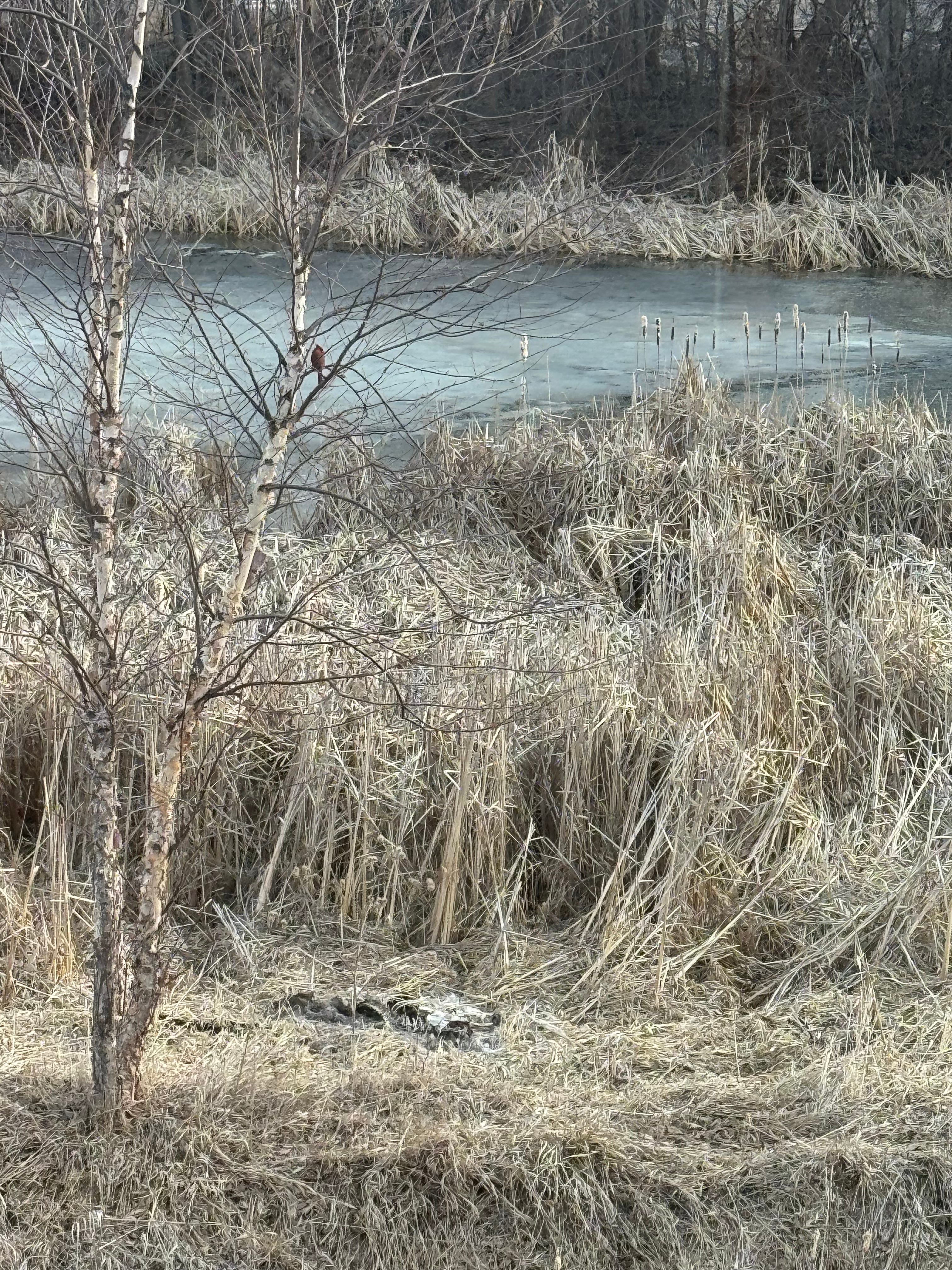
It is, I suppose, a gory subject. Shortly after purchasing our new house in Minnesota in late autumn, we noticed a dead animal down in the marsh grasses near the pond. Partially obscured by the vegetation, and the ground being too wet and spongy to investigate, our curiosity had to wait for the helpful view of a new neighbor’s drone to learn that the animal was, in fact, a deer. A large one. We later spoke with a helpful police officer at the nearby City Hall, who put us in contact with the critter control business the City uses for removal of such matters. We could, we learned, pay him $500 to extract and dispose of the carcass, or as he put it, we could “let nature take its course. Winter, after all, is on the way,” he mused. Already sobered by the financial outflow of acquiring a new home, we voted in favor of nature.
We didn’t think much about the fallen creature throughout the course of winter. In truth, we forgot about it. The ground, after all, was frozen and covered with obscuring snow. Out of sight; out of mind. And we were preoccupied with the coming and going of moving. Overwhelmed by boxes indoors and the puzzle of where to put their contents, we hardly remembered that there was an outdoors.
But temperatures have been rising. The snow has been melting. The ice has been thawing. On the river the ice fishing shacks have been removed and stored until next year. Gradually, tantalizingly, as if in a dance of the seven veils, the marsh grasses and what they have hidden through the winter have, layer by removed layer, been bared. And what the receding snow has revealed is a remnant skeleton, clean; as if in a natural history museum. A simple assemblage of bones. Perhaps the inexorable work of time and decay, or the invisible work of scavengers thriving and nourished beneath the blanket of snow. I’m not enough of a naturalist to know.
But it has been a gruesome fascination, allowing nature to “take its course,” piquing my curiosity about the ongoing pageantry the marsh will host as the pond ice continues to recede and the grasses and cattails continue their resurrection with emergent spring. I would be happy for it NOT to include another fallen deer, but this is, after all, nature. I am not in charge of its comings and goings and machinations in-between. I am but one of its population, dependent, nourished, fascinated, and awed.
Here is a groundedness in this season of Lent, rooted in the promissory yet sobering refrain, “Dust we are, and to dust we shall return.”
Stardust, perhaps, but dust nonetheless. The marsh, in its quotidian fallings and risings, reminds me.
Yes to letting Mother nature take over. I actually watched a wounded deer collapse on the frozen Raccoon River and then be consumed first by three coyotes followed by eagles until she was completely gone. Just in less than 3 hours. She kept all these animals well fed on a freezing winter day. I wonder if you have coyotes and foxes who love the marsh in your backyard. Right now I have bufflehead ducks floating by and a plague of red winged blackbirds!
The idea of "letting nature take its course" is an easy decision when it is a cumbersome or expensive path that would suggest otherwise. We have all taken that path, probably for the best most of the time. What happens when we begin to move that thought process to those who live around us as fellow humans? Where do let nature take its course, and when do we decide to override Mother Nature as incompetent or unfeeling? This seems to me to be where nature, compassion, spirituality, and expediency all create a labrynth of decisions, not easily sorted out.